Getting started
- Exercise at least 15 minutes every day.
- Do aerobic exercise (e.g. walking, stationary cycling, swimming) three times per week.
- Avoid fatigue by exercising first thing in the morning.
- Allow time for warming up and cooling down.
- Gently stretch each joint and muscle group.
- Start with easy exercises, and slowly add more difficult ones as your fitness level improves.
- Build up to doing five -10 repetitions of each exercise.
Choose activities that address your specific Parkinson's symptoms:
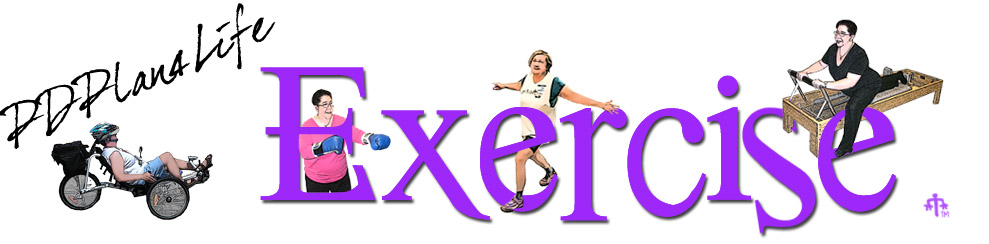
- Improve aerobic conditioning by walking, biking, gardening, swimming, and using exercise machines.
- Increase walking speed and lengthen stride by walking on a treadmill.
- Improve posture and balance through non-contact boxing.
- Practice relaxation through yoga.
- Improve balance and flexibility through Tai chi.
- Improve strength and balance through weight training.
- Improve breathing, balance, flexibility, and mobility through Pilates.
 top top
|

If you experience falling or freezing:
- Do your exercises while seated.
- Hold onto a chair when performing standing exercises.
- Avoid floor exercises if you can’t get up by yourself.
- Only exercise when other people are around to help.
It is never too late to become physically active
Begin increasing your activity level by making simple adjustments to your daily routine: (from the Parkinson Society of Canada)
- Take a walk. Walk 20 steps in your normal way, then take 20 long steps followed by 20 normal steps. Swing your arms for 20 steps. Repeat for the duration of your walk
- Get off the bus one stop early or park the car one block away.
- Take the stairs instead of the elevator.
- Do leg exercises while watching television.
- Play your favorite music and move to the beat.

top |